

The Indian handicraft industry has always mesmerized the global buying community with its rich cultural heritage and exclusive appeal for many centuries. Currently, the Indian handicraft export industry is among the most admirable examples of India’s growth as a global trading nation, integrating time-honored traditions with the new era of demand and supply. Woodcarvings and embroidered textiles, metal art, and handwoven rugs are among the areas of the Indian handicraft industry that are attracting the global buying community seeking exclusive appeal, sustainability, and artistic expertise.
-
Metalware & Brass Craft
Art metalware, such as brass, copper, and silverware, is also a serious competitor on the list of Indian handicrafts. Brass-polished decorations, engraved trays, intricately designed traditional copperware, and collectibles from the Moradabad area of India (often referred to as the “Brass City of India”) are also sought after in Western countries, as there is a strong demand for eco-friendly, handmade metal decorations. Hence, metal craft stands out as the backbone of Indian handicraft exports.
-
Handwoven Rugs and Carpets
Leading the way in the success of handicraft export from India are hand-woven rugs and carpets. Worldwide, consumers love these products, made from wool, cotton, silk, or jute, for their long-lasting durability and beautiful designs.
In fact, the country is among the top exporters of hand-woven carpets, which are mainly shipped to the USA, Europe, and Australia, among other destinations. The USA alone accounts for a significant share of carpet imports.
-
Wooden Handicraft
The woodcrafting traditions from India, right from the carved wooden boxes at Saharanpur to sandalwood figurines, are in high demand in international markets. The manually crafted wooden craft is used for various purposes, such as decorative purposes and utility objects, and thus gets the attention of potential consumers who look for sustainable and manually made craft goods.
International markets, especially in Europe and North America, have gradually begun to accept wood craft articles that have traditional designs mixed with modern design concepts, thus making these articles a crucial part of the country’s handicraft exports.
-
Embroidered and Textile Crafts
Textile crafts represent some of the most diverse and sought-after segments for the export of Indian handicraft products. When it comes to textiles, the demand for such products as Banarasi silk fabrics, Pashmina shawls, block print textiles, and intricately embroidered textiles remains very strong as a result of the growing popularity of such products in the global fashion and home decor segment.
High-quality textiles from such regions as Uttar Pradesh, Kashmir, Rajasthan, and Gujarat have already made a mark for themselves and are known for the excellence that they represent.
-
Leather and Jute Products
Eco-friendly and sustainable handicrafts made of leather and jute are gaining momentum worldwide, as buyers increasingly prefer responsible and handmade products. Indian leather goods like belts, wallets, bags, and footwear are appreciated worldwide for their durability and designs.
Similarly, jute products originating from the East Indian states create a place in markets such as the USA and Europe, where sustainability becomes a core driver of purchase. These handcrafted products underline India’s capacity to marry tradition with modern eco-trends in international demand.
-
Pottery and Ceramics
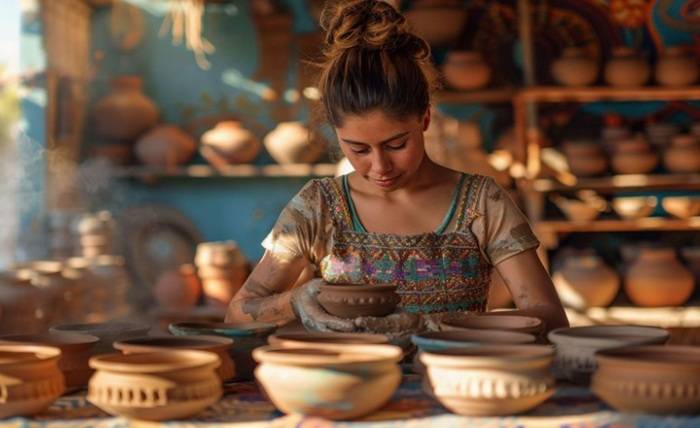
Pottery wares, such as the blue pottery of Jaipur and the terracotta art of various parts of the country, are much appreciated in the international art circuits. The significance of these handicrafts is that they are not only artistic objects used for aesthetic purposes, but they also have utility.The artwork is a reflection of the cultural diversity of the country, which makes it suitable for exports. The role of pottery in the handicraft exports is the realization of the relevance of handicrafts across the globe.
-
Jewelry & Accessories – Copies
Conventional jewelry items like Kundan, Meenakari, or other handmade jewelry items have a significant position in the international markets. Even though it is different from precious jewelry, the concept of imitation jewelry or handmade jewelry is also admired for its artistic aspects, and these items can also be seen in fashion shows or even weddings in foreign countries.
Such items have a significant position in the handicraft export items from India because these items blend traditional craftsmanship with the fashion statements of the contemporary markets.
Handmade Home Decor Items
The international consumers, focusing on uniqueness and quality, are increasingly favoring handmade items of home décor, from complex wall hangings to customized items of decor. The total global market for home decor is exhibiting steady growth, and Indian artisans are poised to capitalize on the opportunity with decor items echoing Indian motifs and patterns of crafting. The handmade items are the best combination of tradition and modern designs, further solidifying India’s stature in the global export field of handicraft export of handmade decor items.
One of the major reasons why Indian handicrafts are valued so dearly overseas is that they are deeply entrenched in Indian culture. Every piece of handicraft tells a story of tradition and legacy—a factor that appeals to overseas clients. This becomes the reason for the success of Indian handicrafts in the international market.
Sustainability and Artistic Value
The Indian handicraft industry has maintained its strong foothold in international markets due to the richness of Indian culture, expert craftsmanship, and the eternal appeal of the products. Textiles, carpets, metalware, wooden artifacts, and eco-jute products are some of the best examples of the versatility of Indian craftsmen. As the global need for authenticity in products and eco-friendly production processes mounts, the potential for export of Indian handicrafts will only multiply in the coming years due to increased access to global e-commerce sites for Indian industries.
Conclusion
Indian handicrafts have remained a prominent force in international markets due to their rich cultural heritage and appeal across all times. Indian handicrafts include textiles, carpets, metalware objects, wooden objects, and eco-friendly jute. As a result of the growing demand for authentic as well as eco-friendly production by consumers across global markets, the potential for handicraft exports has continued to grow. Indian handicrafts have remained a prominent force in international markets due to their rich cultural heritage and appeal across all times. As a result of the growing demand for authentic as well as eco-friendly production by consumers across global markets, the potential for handicraft exports has continued to grow.