


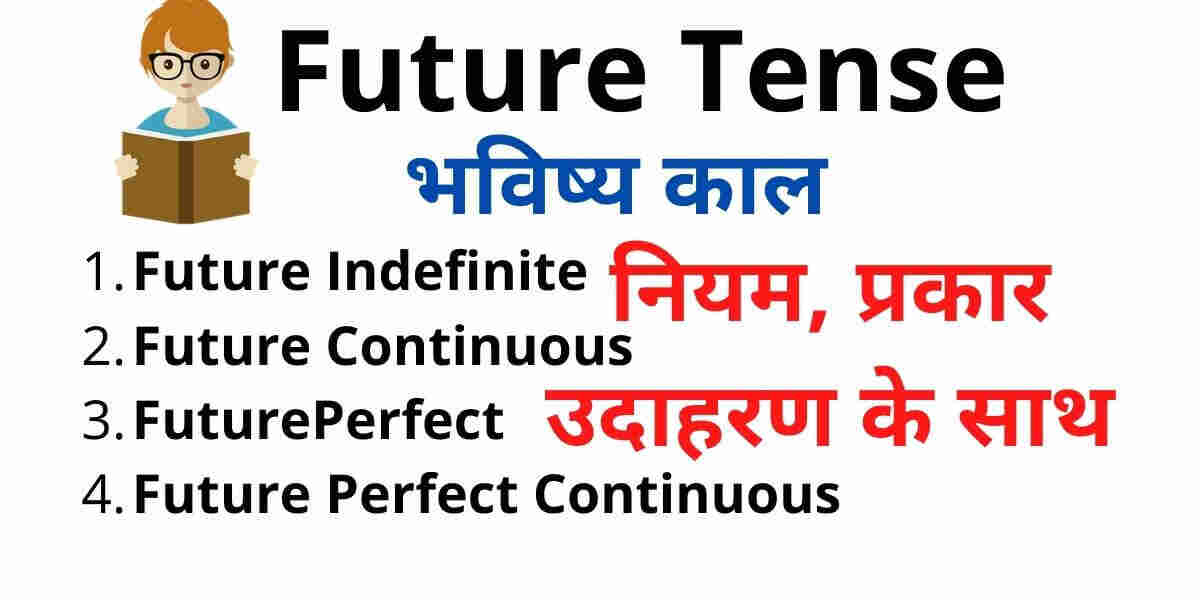
Future Indefinite Tense In Hindi/Future Tense की परिभाषा एवं उसके सभी प्रकारों का वर्णन एक ही आर्टिकल में।
Tense ( काल ) किसी भी वाक्य में क्रिया का वह रूप है जिसके माध्यम से यह पता चलता है कि वाक्य में किये कार्य का समय के साथ क्या सम्बन्ध है; कार्य वर्तमान में हो रहा है, बीते हुए समय में हुआ था या भविष्य में होने वाला है। यही कारण है कि वर्तमान, भूतकाल व भविष्य काल में वाक्यों में सहायता क्रियाएँ भिन्न होती है।
Tenses – Type
Tense तीन प्रकार के होते हैं।
- Present ( प्रेजेंट ) वर्तमान काल
- Past ( पास्ट ) भूतकाल
- Future ( फ्यूचर ) भविष्य काल
प्रत्येक के चार प्रकार होते हैं।
- Indefinite
- Continuous
- Perfect
- Perfect Continuous
सहायक क्रियाएँ उस वाक्य में किये गए कार्य के समय के बारे में बताती हैं, इस आधार पर इन्हें तीन वर्गो में वर्गीकृत किया जा सकता है।
| Tense | Helping Verbs |
| Present Tense Helping Verbs | do, does, is, am, are, has, have, has been, have been |
| Past Tense Helping Verbs Tense | did, was, were, had, had been |
| Future Tense Helping Verbs | will, will be, will have, will have been |
नोट – अब Helping Verb “Shall” का प्रयोग Future Tense Helping Verbs के रूप में प्राय: नहीं किया जाता है।
- Future Tense – क्रिया के जिस रूप से आने वाले कल (भविष्यकाल)में मौजूद कोई स्थिति या किसी घटना के होने का संकेत मिलता है उसे ‘भविष्यकाल’ कहते हैं (आज हम भविष्यकाल के बारे में ही पढ़ेंगे और इसके सभी भाग समझेंगे)
Future Indefinite Tense
इस Tense में मुख्य क्रिया के साथ गा, गे, गी का प्रयोग होता है।
जैसे – राम घूमने जायेगा, सीता नाचेगी , लोग घूमेंगे आदि।
Affirmative (सकारात्मक वाक्य)
Rule: – Subject + will + Verb 1st form + Object.
(Subject चाहे Singular हो या Plural, “Will” का ही प्रयोग होता है।
| Sr.No. | हिन्दी वाक्य | English Sentences |
| 1. | राम तुमसे मिलेगा। | Ram will meet you. |
| 2. | लोग घूमने जायेंगे। | People will go for a walk. |
| 3. | वह तुम्हें कॉल करेगी | She will call you. |
Negative(नकारात्मक)
Rule: Subject+will + not +verb 1st form+object.
| Sr. No. | हिन्दी वाक्य | English sentences |
| 1. | राम तुमसे नहीं मिलेगा। | Ram will not meet you. |
| 2. | लोग घूमने नहीं जायेंगे। | People will not go for a walk. |
| 3. | वह तुम्हें कॉल नहीं करेगी। | She will not call you. |
Interrogative(प्रश्नवाचक वाक्य)
Rule: Wh family+will+subject+verb 1st form+object?
प्रश्नवाचक वाक्यों में Helping Verb (will ) Subject से पहले आ जाती है। और अगर वाक्य में Wh family जैसे-who, why, what, where, which, how long आदि का प्रयोग हो तो वो सबसे पहले ही प्रयोग की जाती है।
| Sr.No. | हिन्दी वाक्य | English sentences |
| 1. | राम तुमसे कब मिलेगा? | When will Ram meet you? |
| 2. | लोग कहाँ जायेंगे? | Where will people go? |
| 3. | वह तुम्हें कॉल कैसे करेगी ? | How will she call you? |
Negative Interrogative(नकारात्मक प्रश्नवाचक वाक्य)
Rule: Wh family+will +subject+not+verb 1st form+object?
| Sr. No. | हिन्दी वाक्य | English sentences |
| 1. | राम तुमसे क्यों नहीं मिलेगा ? | Why will Ram not meet you? |
| 2. | क्या लोग घूमने नहीं जायेंगे ? | Will people not go for a walk? |
| 3. | क्या वह तुम्हे कॉल नहीं करेगी ? | Will she not call you? |
Future Indefinite Tense In Hindi/Future Tense
Future Continuous Tense
इस Tense में मुख्य क्रिया के साथ रहा होगा, रही होगी, रहे होंगे, रहा हूँगा का प्रयोग होता है।
जैसे – राम घूम रहा होगा, सीता नाच रही होगी, लोग घूम रहे होंगे, मैं घूम रहा हूँगा आदि
Affirmative (सकारात्मक वाक्य)
Rule: Subject+will be +Verb 1st Form+Ing+ Object.
Subject चाहे Singular हो या Plural, “Will be” का ही प्रयोग होता है।
| Sr. No. | हिन्दी वाक्य | English sentences |
| 1 | राम घूमने जा रहा होगा। | Ram will be going for a walk. |
| 2 | वह घूम रहा होगा। | He will be walking. |
| 3 | वह प्रतियोगिता में नाच रही होगी। | She will be dancing in the competition. |
Negative(नकारात्मक)
Rule: Subject+will not be + Verb 1st form+ing+Object.
| Sr. No. | हिन्दी वाक्य | English sentences |
| 1. | वो सो नहीं रहा होगा। | He will not be sleeping. |
| 2. | पापा इस समय अख़बार नहीं पढ़ रहे होंगे। | Dad will not be reading the newspaper right now. |
| 3. | वह इस वक्त नहीं खेल रही होगी। | She will not be playing at this moment. |
Interrogative(प्रश्नवाचक वाक्य)
Rule:<WH family>+will +Subject+be +Verb 1st form+ing+object?
प्रश्नवाचक वाक्यों में Helping Verb (will) Subject से पहले आ जाती है। और अगर वाक्य में Wh family जैसे-who, why, what, where, which, how long आदि का प्रयोग हो तो वो सबसे पहले ही प्रयोग की जाती है।
| Sr. No. | हिन्दी वाक्य | English sentences |
| 1. | राम कहाँ सो रहा होगा? | Where will Ram be sleeping? |
| 2. | क्या वह घूम रहा होगा? | Will he be walking? |
| 3. | वो कुत्ते को क्या खिला रहा होगा। | What will she be feeding the dog? |
Negative Interrogative(नकारात्मक प्रश्नवाचक वाक्य)
Rule: <Wh family>+will +subject+not+be+verb 1st form+ing+object?
| Sr. No. | हिन्दी वाक्य | English sentences |
| 1. | क्या राम बाजार नहीं जा रहा होगा ? | Will Ram not be going to market? |
| 2. | क्या बच्चे शोर नहीं मचा रहे होंगे ? | Will children not be making noise? |
| 3. | क्या मैं उस वक्त सो नहीं रहा हूँगा ? | What will she be feeding the dog? |
Future Indefinite Tense In Hindi/Future Tense
Future Perfect Tense
इस Tence में मुख्य क्रिया के साथ चुका होगा, चुकी होगी, चुके होंगे, लिया होगा, दिया होगा, दी होगी,ली होगी,की होगी आदि का प्रयोग होता है।
जैसे – राम घूम चुका होगा, सीता नाच चुकी होती, लोग घूम चुके होंगे, मैं घूम चुका हूँगा आदि
Affirmative (सकारात्मक वाक्य)
Rule: Subject+will have+verb 3rd form+object.
Subject चाहे “singular’ हो या “plural ‘ “Will have” का प्रयोग होता है।
| Sr. No. | हिन्दी वाक्य | English sentences |
| 1 | राम बाजार जा चूका होगा। | Ram will have gone to market. |
| 2 | मैं इस समय तक खेल चुका हूँगा। | I will have played by now. |
| 3 | लोग स्टेज पर नाच रहे होंगे। | People will have danced on the stage. |
| 4 | वह प्रतियोगिता जीत चुकी होगी। | She will have won the competition. |
Negative(नकारात्मक)
Rule: Subject+will not have+verb 3rd form+object.
| Sr. No. | हिन्दी वाक्य | English sentences |
| 1 | राम बाजार नहीं गया होगा। | Ram will not have gone to market. |
| 2 | उसने तुम्हें कल नहीं देखा होगा। | He will not have seen you yesterday. |
| 3 | लोग कल्पना से नहीं मिले होंगे। | People will not have met Kalpana. |
| 4 | वह वहाँ नहीं गयी होगी। | She will not have gone here. |
Interrogative(प्रश्नवाचक वाक्य)
Rule:<Wh family>+will+subject+have+verb 3rd form+object?
प्रश्नवाचक वाक्यों में Helping Verb (will) Subject से पहले आ जाती है। और अगर वाक्य में Wh family जैसे-who, why, what, where, which, how long आदि का प्रयोग हो तो वो सबसे पहले ही प्रयोग की जाती है।
| Sr. No. | हिन्दी वाक्य | English sentences |
| 1 | राम बाजार क्यों गया होगा ? | Why will Ram have gone to market? |
| 2 | क्या उसने तुम्हें कल देखा होगा ? | Will he have seen you yesterday? |
| 3 | लोग कल्पना से कब मिले होंगे ? | When will people have met kalpana? |
| 4 | वह वहाँ कैसे गयी होगी ? | How will She have gone there? |
Negative Interrogative(नकारात्मक प्रश्नवाचक वाक्य)
Rule:<Wh family>+will+subject+not+have+verb 3rd form+object?
| Sr. No. | हिन्दी वाक्य | English sentences |
| 1 | क्या राम घूमने नहीं गया होगा ? | Will Ram not have gone for a walk? |
| 2 | क्या उसने तुम्हें कल नहीं देखा होगा ? | Will he not have seen you yesterday? |
| 3 | लोग कल्पना से क्यों नहीं मिले होंगे ? | Why will people not have met Kalpana? |
| 4 | क्या वह प्रतियोगिता में नहीं नाची होगी ? | Will she not have danced in the competition? |
Future Indefinite Tense In Hindi/Future Tense
Future Perfect Continuous Tense
इस Tense में मुख्य क्रिया के साथ रहा होगा, रही होगी, रहे होंगे, रहा हूँगा का प्रयोग होता है। बिलकुल वैसे ही जैसे Continuous Tense में होता है।
फर्क सिर्फ इतना है कि यहाँ पर समय के बारे में भी बताया जाता है। और ध्यान रहे समय के साथ “से” का प्रयोग होता है।
जैसे – राम दो घंटे से घूम रहा होगा, सीता 4 दिन से नाच रही होगी, लोग 10 बजे से घूम रहे होंगे, मैं सुबह से रो रहा हूँगा आदि
समय के बारे में बताये जाने पर Since या For का प्रयोग होता है।
Since का प्रयोग निश्चित समय के लिए और For का प्रयोग अनिश्चित समय के लिए यानि अवधि के लिए।
Affirmative (सकारात्मक वाक्य)
Rule: Subject+will have been+verb 1st form+ing+object+since/for+<point of time?duration>.
Subject चाहे Singular हो या Plural, will have been’ का प्रयोग ही सहायक क्रिया के रूप में किया जाता है।
| Sr. No. | हिन्दी वाक्य | English sentences |
| 1 | राम 2 घंटे से खेल रहा होगा। | Ram will have been playing for 2 hours. |
| 2 | वह 4 बजे से पढ़ रहा होगा। | He will have been studying since 4 o’clock. |
Negative(नकारात्मक)
Rule: Subject+will not have been+verb 1st form+ing+object+since/for+<point of time?duration>.
| Sr. No. | हिन्दी वाक्य | English sentences |
| 1 | राम 2 घंटे से नहीं खेल रहा होगा। | Ram will not have been playing for 2 hours. |
| 2 | वह 4 बजे से नहीं पढ़ रहा होगा। | He will not have been studying since 4 o’clock. |
Interrogative(प्रश्नवाचक वाक्य)
Rule: <Wh family>+will+subject+have been+verb 1st form+ing+object+since/for+<point of time?duration>.
प्रश्नवाचक वाक्यों में Helping Verb (will ) Subject से पहले आ जाती है। और अगर वाक्य में Wh family जैसे-who, why, what, where, which, how long आदि का प्रयोग हो तो वो सबसे पहले ही प्रयोग की जाती है।
| Sr. No. | हिन्दी वाक्य | English sentences |
| 1 | क्या राम 2 घंटे से खेल रहा होगा ? | Will Ram have been playing for 2 hours? |
| 2 | क्या वह 4 बजे से पढ़ रहा होगा ? | Will he have been studying since 4 o’clock? |
Negative Interrogative(नकारात्मक प्रश्नवाचक वाक्य)
Rule:<Wh family>+will+subject+not+have been+verb 1st form+ing+object+since/for+<point of time?duration>.
| Sr. No. | हिन्दी वाक्य | English sentences |
| 1 | क्या राम 2 घंटे से खेल नहीं रहा होगा ? | Will Ram not have been playing for 2 hours? |
| 2 | क्या वह 4 बजे से पढ़ नहीं रहा होगा ? | WIll he not have been studying since 4 o’clock? |
ये भी पढ़ें