


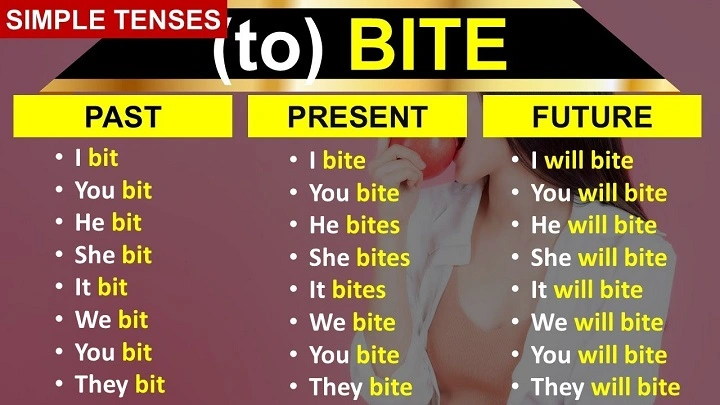
The verb bite is commonly used to describe the action of using teeth to cut into something. It is an irregular verb, which means its past tense form does not follow the regular “-ed” pattern. Knowing how to correctly use the past tense of bite is essential for clear and accurate communication. This comprehensive blog post explores the past tense of bite, provides examples, explains common mistakes, and offers useful tips for learners of all levels.
What Is the Past Tense of Bite?

The past tense of bite is bit. Unlike regular verbs, which simply add “-ed” to form the past tense, bite changes its vowel from “i” to “i” (pronounced differently) and drops the “e.”
- Present tense: The dog bites the bone.
- Past tense: The dog bit the bone yesterday.
Why Is Bite an Irregular Verb?
English verbs are divided into regular and irregular. Regular verbs add “-ed” for their past forms (e.g., talk → talked). Irregular verbs change forms in various ways. Understanding these forms helps learners speak and write more naturally.
How to Use Bit in Past Tense Sentences
The past tense bit describes an action completed in the past.
Affirmative Sentences
- She bit into the juicy apple.
- The dog bit the mailman last week.
- He bit his lip nervously.
Negative Sentences
Use did not (didn’t) + base verb bite to form negatives.
- I did not bite the sandwich.
- The cat didn’t bite anyone.
Questions
Form questions using did + subject + base verb.
- Did you bite your tongue?
- Did the dog bite the child?
Examples of Past Tense of Bite in Different Contexts
Describing Past Actions
- Yesterday, the dog bit the gardener’s hand.
- She accidentally bit into a sour lemon.
Expressing Reactions
- He bit his nails while waiting for news.
- The snake bit the traveler during the hike.
Common Mistakes with the Past Tense of Bite
- Incorrect: He bited the apple.
- Correct: He bit the apple.
- Incorrect: Did she bited you?
- Correct: Did she bite you?
Remember, after did, always use the base form bite.
Using Bite and Bit in Perfect Tenses
Present Perfect

- I have bitten into something spicy before.
- They have bitten their nails during the exam.
Past Perfect
- She had bitten her tongue before realizing it.
- The dog had bitten three people before it was caught.
Synonyms and Alternative Expressions for Bite
To add variety, use synonyms or related phrases:
- Nibble: The baby nibbled on the cookie.
- Chew: He chewed the food quickly.
- Chomp: The dog chomped on the bone.
- Gnaw: The mouse gnawed on the cheese.
Tips to Practice Using the Past Tense of Bite Correctly
- Write sentences describing past events using bit.
- Practice forming negatives and questions with did + bite.
- Listen to conversations or stories using the verb bite in past tense.
- Use flashcards with bite, bit, and bitten for revision.
- Correct yourself when you hear or see incorrect usage.
Frequently Asked Questions (FAQs) About the Past Tense of Bite
What is the past tense of bite?
The past tense of bite is bit.
How do I make negative sentences with bite in past tense?
Use did not (didn’t) + base verb bite. For example, I did not bite the food.
Can I say “bited” as a past tense?
No, bited is incorrect. The correct past tense is bit.
How do I ask questions about bite in the past tense?
Use Did + subject + bite. For example, Did you bite your tongue?
What is the past participle of bite?
The past participle of bite is bitten (used with have/has/had).
Knowing that bit is the correct past tense form of bite and using it correctly is essential for fluency in English. Avoid common mistakes by practicing with real-life examples and remembering the irregular verb forms. With consistent practice, your English will become more natural and effective.