


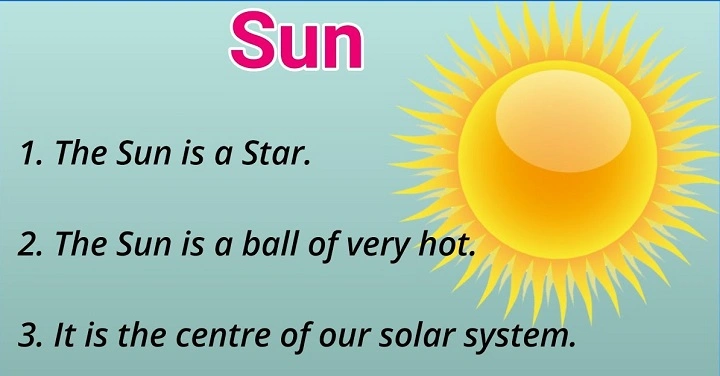
The word “sun” is simple, yet powerful. It’s a word that appears in science, poetry, storytelling, conversation, and education. For language learners or even native speakers trying to improve their grammar and writing, one common question is: How do I make a sentence with “sun”? This post explores just that—how to create strong, clear, and meaningful sentences using the word “sun.”
Understanding the Word “Sun”

Before jumping into sentence-making, it’s important to understand what the word “sun” means. It can be used literally to describe the star at the center of our solar system, or figuratively in literature and everyday language.
The word functions most often as a noun, but in poetic or figurative speech, it can be part of metaphors, comparisons, or imagery. Because of its vivid and universal nature, “sun” is a favorite word in creative writing and everyday speech alike.
Whether you’re a student writing a sentence for homework or a content creator looking for stronger imagery, knowing how to use “sun” in various sentence types is a valuable skill.
Simple Sentences with “Sun”
Let’s start with basic sentences for beginners. These are straightforward and usually follow a subject-verb-object structure.
- The sun is shining.
- I saw the sun rise this morning.
- The sun sets in the west.
- We played outside under the hot sun.
- The sun gives us light and heat.
Each of these sentences is short, clear, and uses “sun” as the subject or part of the object.
These examples are perfect for young learners or ESL students just starting to build confidence in English.
Descriptive Sentences Using “Sun”
When you’re trying to describe the scene, atmosphere, or mood, the sun becomes more than just a celestial object—it helps paint the picture.
- The golden sun bathed the meadow in a warm, soft glow.
- A bright sun hovered above the calm sea.
- The scorching sun burned the dry earth.
- Through the clouds, the sun peeked shyly, lighting up the morning sky.
These sentences use adjectives and descriptive language to set a tone or evoke a visual.
This technique is especially useful in storytelling and narrative writing, where setting matters.
Scientific Sentences with “Sun”
When used in scientific writing or educational contexts, the word “sun” appears in factual, informative statements.
- The sun is a medium-sized star located at the center of our solar system.
- The sun produces energy through nuclear fusion.
- Sunlight contains ultraviolet rays, which can damage skin cells.
- The Earth orbits the sun once every 365 days.
- Plants use sunlight to perform photosynthesis.
Notice how these sentences are often longer and include technical vocabulary. They serve to inform rather than to describe emotionally.
Poetic and Figurative Sentences with “Sun”

The word “sun” can be used in a metaphorical or poetic way, giving your writing emotional depth or artistic flair.
- Her smile was as bright as the morning sun.
- Hope rose like the sun after a long night of fear.
- The sun kissed the mountain peaks as dawn broke.
- You are my sun on the darkest days.
- The sun danced on the surface of the river.
Writers and poets often use the sun symbolically—to represent life, joy, energy, or even time and renewal.
These types of sentences are excellent for creative writing, poetry, and speeches.
Using “Sun” in Complex Sentences
As your writing improves, you may want to include the word “sun” in more complex sentence structures.
- Although the sun was setting, the air remained hot and still.
- The children continued to play, unaware that the sun had almost disappeared behind the hills.
- If the sun rises earlier tomorrow, we can start the hike before it gets too hot.
- Because the sun shines directly overhead at noon, that’s when shadows are shortest.
These sentences use subordinating conjunctions and dependent clauses. They demonstrate more advanced grammar and are perfect for essays and professional writing.
Common Mistakes to Avoid
When trying to make a sentence with “sun,” beginners often make a few common errors:
- Confusing sun with son – “Sun” refers to the star; “son” refers to a male child.
- Capitalizing sun unnecessarily – Unless it’s at the beginning of a sentence or in a title, don’t capitalize “sun.”
- Forgetting articles – Use “the sun” when referring to the celestial object.
Examples of Incorrect vs Correct:
- ❌ Sun is hot.
✅ The sun is hot. - ❌ I see Sun everyday.
✅ I see the sun every day.
Tips for Practice
If you’re learning how to use the word “sun” in sentences, here are some practical tips:
- Write a daily sentence using the word “sun.” Challenge yourself to make it different each day—use it in a description, a scientific statement, or a piece of dialogue.
- Read stories or poems that mention the sun. Notice how authors use the word for mood, meaning, or metaphor.
- Practice rewriting sentences. Take a basic sentence like “The sun is shining” and turn it into a complex or poetic version. For example: “The golden sun was shining through the trees, casting long shadows on the ground.”
The word “sun” may seem simple, but it opens up endless possibilities in writing and speaking. Whether you’re writing a poem, a story, a science report, or just practicing grammar, you can use “sun” in countless ways to express information, emotion, or imagery.
By practicing a variety of sentence types—from simple to complex, literal to figurative—you’ll not only improve your English but also discover the richness of language.
So next time you hear the phrase “sun make sentence,” you’ll know exactly how to shine.