


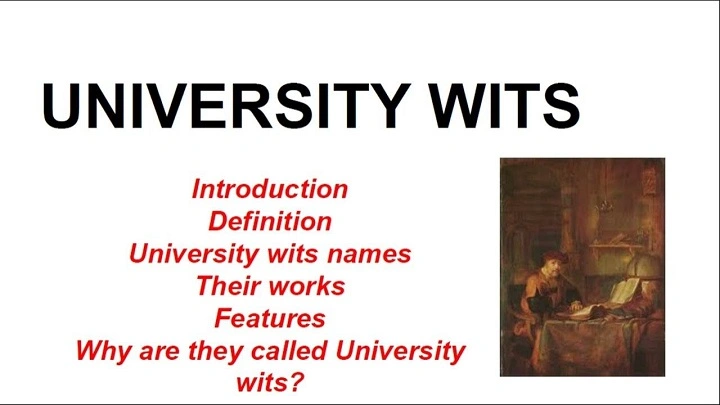
The University Wits were a group of highly educated, early Elizabethan dramatists and writers who laid the foundation for English drama before the rise of William Shakespeare. Most of them were associated with the prominent universities of Oxford and Cambridge, hence the name “University Wits.”
They were bold, innovative, and sophisticated writers who introduced a new level of literary professionalism to English theatre and literature. Their works often included elaborate language, complex characters, and intense emotions, all of which would deeply influence Shakespeare and his contemporaries.
The University Wits made drama more secular, intellectual, and appealing to a broader audience beyond the traditional courtly or religious plays.
List of University Wits Names

The key figures commonly recognized as the University Wits are:
- Christopher Marlowe
- Robert Greene
- Thomas Nashe
- Thomas Lodge
- George Peele
- John Lyly
- Thomas Kyd
Each of these writers had a unique style and contribution to English drama and prose.
Let’s look at them one by one.
Christopher Marlowe
Christopher Marlowe (1564–1593) is often considered the most important member of the University Wits. A graduate of Cambridge University, Marlowe revolutionized English drama with his use of blank verse and larger-than-life tragic heroes.
Notable Works:
- Doctor Faustus
- Tamburlaine the Great
- The Jew of Malta
- Edward II
Contribution:
Marlowe introduced the concept of the “heroic tragedy” and perfected dramatic blank verse. His powerful protagonists and deep psychological explorations influenced Shakespeare’s tragic characters.
Robert Greene
Robert Greene (1558–1592), a graduate of Cambridge, was a novelist, playwright, and pamphleteer. He is famous for his prose works as well as his contributions to drama.
Notable Works:
- Pandosto (inspired Shakespeare’s The Winter’s Tale)
- The Honourable History of Friar Bacon and Friar Bungay
- A Groatsworth of Wit (notable for mentioning Shakespeare)
Contribution:
Greene was one of the earliest English prose fiction writers. His romances and plays were instrumental in blending realism with entertainment.
Thomas Nashe
Thomas Nashe (1567–1601), another Cambridge graduate, was known for his sharp wit, satirical writing, and dynamic prose style.
Notable Works:
- The Unfortunate Traveller
- Pierce Penniless, His Supplication to the Devil
Contribution:
Nashe’s energetic prose and satirical tone made a significant impact on English literature. He also helped popularize the picaresque novel style in England.
Thomas Lodge
Thomas Lodge (1557–1625), educated at Oxford, excelled as both a dramatist and a prose writer.
Notable Works:
- Rosalynde (source material for Shakespeare’s As You Like It)
- The Wounds of Civil War
Contribution:
Lodge’s pastoral romances were among the earliest examples of the genre in English literature. His mix of poetry and prose influenced both Elizabethan fiction and drama.
George Peele
George Peele (1556–1596), a Cambridge scholar, was versatile in both poetry and drama.
Notable Works:
- The Old Wives’ Tale
- The Arraignment of Paris
Contribution:
Peele was known for his lyrical poetry and pageant plays. His works combined mythological subjects with accessible popular storytelling.
John Lyly
John Lyly (1554–1606), a graduate of Oxford, gained fame primarily through his prose romances and court comedies.
Notable Works:
- Euphues: The Anatomy of Wit
- Euphues and His England
- Campaspe
- Endymion
Contribution:
Lyly’s highly ornate style, known as “Euphuism,” influenced prose writing for a generation. His witty court comedies set the tone for later dramatic works intended for performance before royalty.
Thomas Kyd
Thomas Kyd (1558–1594) is sometimes considered an honorary University Wit, although his educational background is less documented compared to others.
Notable Works:
- The Spanish Tragedy
Contribution:
Kyd pioneered the revenge tragedy genre, setting a template that Shakespeare would later use for Hamlet. His influence on the structure and themes of Elizabethan tragedy was profound.
University Wits and Their Collective Impact

The University Wits shared certain characteristics that set them apart:
- They introduced blank verse and elevated dramatic language.
- They portrayed larger-than-life characters driven by grand passions.
- They moved drama away from morality plays to more secular, human-centered narratives.
- Their works contained a mix of classical influences and English traditions.
Without the groundwork laid by these talented writers, English Renaissance drama — especially the genius of Shakespeare — would have developed very differently.
Quick Summary Table of the University Wits
| Name | University | Major Work | Main Contribution |
| Christopher Marlowe | Cambridge | Doctor Faustus | Mastery of blank verse, tragic heroes |
| Robert Greene | Cambridge | Friar Bacon and Friar Bungay | Early novelist and dramatist |
| Thomas Nashe | Cambridge | The Unfortunate Traveller | Satirical prose and picaresque style |
| Thomas Lodge | Oxford | Rosalynde | Pastoral romance influence |
| George Peele | Cambridge | The Old Wives’ Tale | Lyric poetry and pageant plays |
| John Lyly | Oxford | Euphues | Euphuistic prose and court comedies |
| Thomas Kyd | Uncertain | The Spanish Tragedy | Father of the revenge tragedy genre |
The University Wits were pioneers who shaped the future of English drama and literature. Their bold use of language, themes of human passion, and experiments with dramatic form prepared the ground for the literary explosion of the late Elizabethan period, culminating in the works of Shakespeare and his peers. Their legacy remains a cornerstone in the history of English literature, celebrated for its daring creativity and enduring impact.