

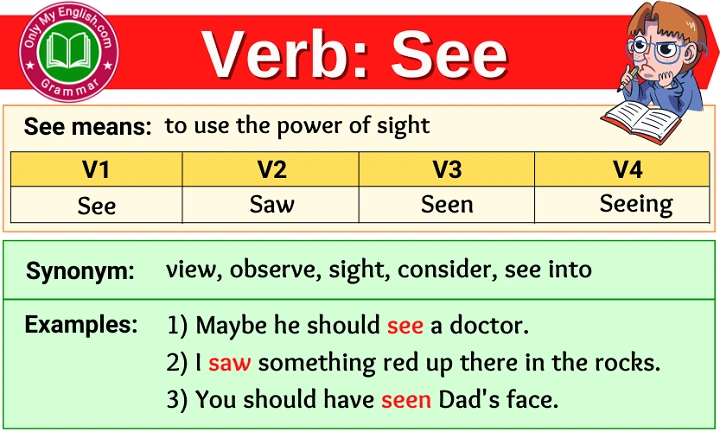
See is one of the most frequently used verbs. When observing something, someone, or your environment, you use it. It is easy to use and necessary for writing and speaking.
Saw is the past tense of see. It displays the past participle form.
Meaning
The verb “see” refers to observing or observing something. It can also refer to meeting or comprehending someone. There are numerous applications for it.
Examples:
• She sees her teacher every day.
• They see the movie together.
• We see what you mean.
• He sees his friends at school.
All these sentences are in the present tense. The action is happening now or happens regularly. When you talk about the past, you must change “see” to “saw.”
Forms of See
Every verb in English has three main forms. The verb “see” changes as follows:
- Present form: see
• Past form: saw
• Past participle form: seen
Examples:
• Present: I see a bird.
• Past: I saw a bird.
• Past participle: I have seen a bird.
You can see that see becomes saw in the past tense. You can also see that it becomes seen when used with have, has, or had.
Simple Meaning of Saw

Saw is the past tense of see. You use it when you talk about something that happened in the past.
Examples:
• I saw a movie yesterday.
• She saw her friend last night.
• He saw the teacher in the class.
Each sentence shows something that already happened. The action is completed.
Simple Meaning of Seen
Seen is the past participle of see. You use it with helping verbs. Such as has, have, or had. You never use seen alone.
Examples:
• I have seen that movie before.
• She has seen her results.
• They have seen the new shop.
• We had seen the match earlier.
• He has seen the car many times.
Difference Between Saw and Seen
The difference between “saw” and “seen” is simple. “Saw” is the past form. Seen is the past participle form.
Examples:
• I saw the film yesterday. (Simple past)
• I have seen the film before. (Present perfect)
• She saw the bird fly. (Past)
• She has seen many birds. (Perfect form)
Remember:
You use “saw” without a helping verb.
You use “seen” with has, have, or had.
Sentence Structure Using Saw
The structure of a sentence with “saw” is:
Rule:
Subject + saw + object
Examples:
• I saw a rainbow.
• She saw her friend at school.
• They saw a tiger in the forest.
• He saw his parents at the airport.
• We saw many stars last night.
Sentence Structure Using Seen
The structure of sentences with “seen” depends on the helping verb.
Rule:
Subject + has/have/had + seen + object
Examples:
• I have seen that movie.
• She has seen the sunset from the hill.
• We had seen the result before others.
• They have seen the teacher today.
• He has seen that place many times.
Worksheet 1: Correct the Sentences
Fix the errors in these sentences.
- I seen him yesterday.
- She have saw the film already.
- They seen the teacher at school.
- He has saw the new car.
- We seen the sunrise.
Correct Answers:
- I saw him yesterday.
- She has seen the film already.
- They saw the teacher at school.
- He has seen the new car.
- We saw the sunrise.
Worksheet 2: Match the Sentences
| Start | End |
| I saw | a rainbow after the rain. |
| She has seen | the Eiffel Tower in Paris. |
| They saw | a lion at the zoo. |
| He has seen | the new movie twice. |
| We saw | our teacher at the market. |
Examples in Daily Use
You use “saw” and “seen” every day when you talk about your experiences.
- I saw my best friend this morning.
• She has seen this book many times.
• We saw a football match last week.
• They have seen a new laptop in the shop.
• He saw his cousin at the airport.
Worksheet 3: Write Your Own Sentences
Write five sentences using “saw” and five using “seen.”
Example:
• I saw a beautiful garden yesterday.
• She saw her friends in the market.
• They saw the new movie last night.
• He saw his teacher at school.
• We saw the rainbow.
Now with “seen”:
• I have seen that garden before.
• She has seen her results today.
• They have seen the concert already.
• He has seen the car many times.
• We have seen that actor on TV.
Worksheet 5: Rearrange the Words
Arrange the words:
- seen / has / she / the / film.
- saw / yesterday / dog / I / a.
- have / they / seen / the / result.
- saw / bird / he / a / tree / on.
- have / you / seen / the / book.
Answers:
- She has seen the film.
- I saw a dog yesterday.
- They have seen the result.
- He saw a bird on a tree.
- Have you seen the book
Phrases with See
The word “see” appears in many common expressions in English.
- See you soon – used to say goodbye.
• See you later – used when you will meet again soon.
• See for yourself – to check something personally.
• Let me see – used when you think before answering.
• As far as I can see – means as much as I understand.
Examples:
• I will see you soon.
• Let me see what I can do.
• You can see for yourself.
• As far as I can see, it is clear.
Past Continuous Form of See
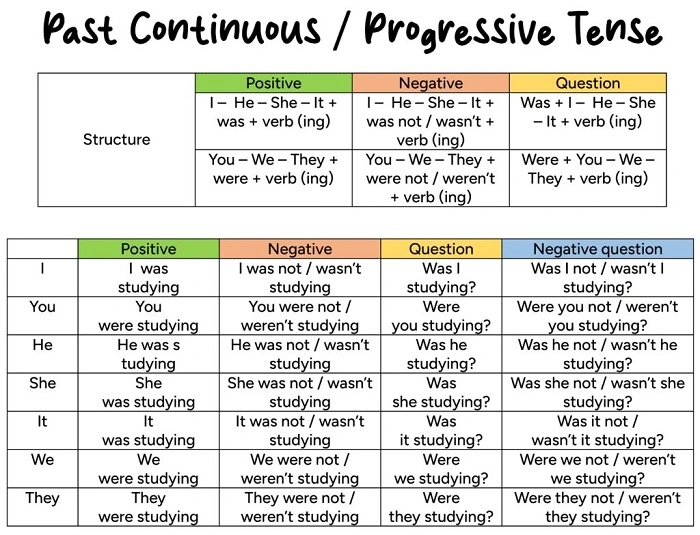
Sometimes you talk about something that was happening in the past for a period of time. Then you use “was seeing” or “were seeing.”
Examples:
• I was seeing my friend when the rain started.
• She was seeing a movie when you called.
• They were seeing the doctor yesterday morning.
• He was seeing his teacher for advice.
• We were seeing the sunset by the beach.
Also Read: Bite Past Tense: Simple Rules, Meaning, and Examples
Past Perfect Form of See
You use “had seen” when one past event happened before another.
Examples:
• I had seen the movie before it was released.
• She had seen the report before the meeting.
• They had seen the match before dinner.
• We had seen the news before going to work.
• He had seen the car before buying it.
Worksheet 6: Complete the Paragraph
Fill in the blanks with saw or seen.
We ______ a movie together. Later, she said she had ______ my pictures online. I was happy that she had ______ how much I changed.
Answers:
saw, seen, seen
Daily Practice Sentences
Practice writing these sentences daily:
• I saw a bird.
• She saw her teacher.
• They saw a rainbow.
• I have seen this before.
• He has seen the news.
Practice Tips
• Write five sentences daily using “saw.”
• Write five sentences using “seen.”
• Watch English videos and listen for both words.
• Read English stories and note examples of “see.”
• Try speaking aloud what you saw today.
Common Time Words Used with See
• Yesterday
• Last week
• A few days ago
• Before
• Recently
• Earlier
Examples:
• I saw him yesterday.
• She has seen the movie recently.
• They saw the teacher last week.
• We have seen this before.
Simple Table of Forms
| Base Form | Past Form | Past Participle | Continuous Form |
| See | Saw | Seen | Seeing |
The word “see” is easy to understand when you know its three forms. You use saw to describe what happened. When using helpful verbs like has, have, or had, you use seen.
Practice using short sentences each day. Write about your observations and observations. You get more self-assurance the more you use it. Speaking naturally comes from seeing the world through the lens of grammar.