


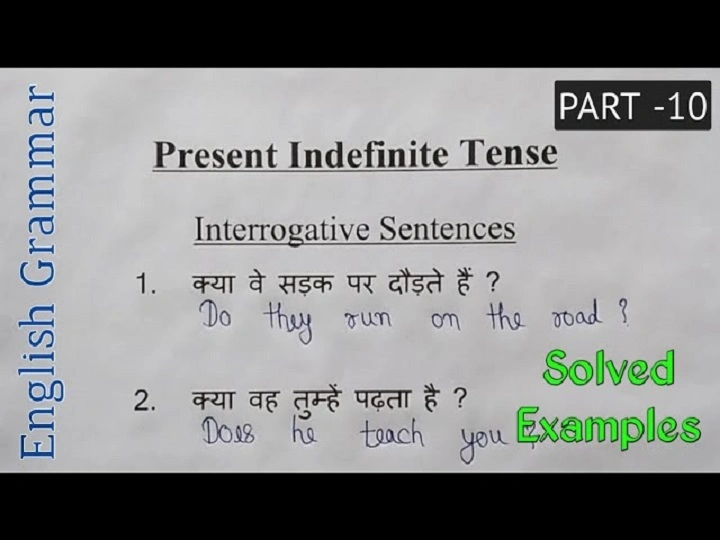
Is tense grammar ka sabse basic aur important tense hai. Har English learner ke liye iska sahi use samajhna bahut zaruri hai. Iska use hum tab karte hain jab koi action daily, regularly, ya hamesha hota hai. Yeh tense habits, routines, facts aur universal truths batata hai. Isko Simple Present Tense bhi kaha jata hai.
Examples:
• I go to school every morning.
• She drinks milk before sleeping.
• They play football in the evening.
• We study English daily.
Yeh sab actions har din repeat hote hain. Isliye inhe is me likha jata hai. Yeh tense bolne, likhne aur exam preparation dono me helpful hota hai.
What Is Present Indefinite Tense

Is tense un actions ke liye use hota hai jo daily hote hain, baar baar repeat hote hain, ya hamesha sach hote hain. Iska use permanent situation aur habits dikhane ke liye hota hai.
Examples:
• She sings well.
• They play cricket every Sunday.
• We live in Dhaka.
In sabhi examples me actions repeat hote hain ya facts hote hain. Is tense facts, truths, aur regular activities ke liye perfect hai.
Structure
| Sentence Type | Structure | Example |
| Affirmative | Subject + Verb (first form) + Object | He plays football |
| Negative | Subject + Do/Does + Not + Verb (first form) + Object | He does not play football |
| Interrogative | Do/Does + Subject + Verb (first form) + Object | Does he play football? |
Helping Verbs
Is me do helping verbs use hote hain, “Do” aur “Does”. “Do” ka use I, We, You, They ke saath hota hai. “Does” ka use He, She, It aur singular nouns ke saath hota hai.
Examples:
• I play football.
• He plays football.
• They do not play football.
• She does not drink tea.
• We do our homework daily.
Important Rules
- Verb ka first form use hota hai.
- He, She, It ke saath verb me “s” ya “es” lagta hai.
- Negative sentence me “do” ya “does” ke baad “not” lagta hai.
- Interrogative sentence me “do” ya “does” sentence ke start me lagta hai.
- “Does” ke saath verb me “s” nahi lagta.
- Sentence me often, always, usually, sometimes, never, every day jaise words use hote hain.
Examples:
• He plays football.
• He does not play football.
• Does he play football?
• I go to school daily.
Examples of Affirmative
• I study English every day.
• She cooks food in the evening.
• They go to school regularly.
• He plays the guitar very well.
• We eat rice at lunch.
• The baby cries at night.
• The teacher teaches English.
Examples of Negative
• She does not read novels.
• They do not play cricket.
• We do not sleep early.
• The teacher does not shout.
• My mother does not eat sweets.
• She does not go outside alone.
• The boy does not study at night.
• It does not rain in winter.
Examples of Interrogative
• Do you like coffee?
• Does he play football?
• Do they live in Dhaka?
• Does she work in a school?
• Do we go to college every day?
• Does your brother drive a car?
• Do the students understand the lesson?
• Does the train stop here?
• Do you eat rice daily?
• Does your mother cook dinner?
Worksheet 1: Fill in the Blanks
- He ____ (play) football every day.
- They ____ (go) to school regularly.
- She ____ (cook) food at night.
- I ____ (read) a book before sleeping.
- We ____ (watch) TV in the evening.
Answers
- plays
- go
- cooks
- read
- watch
Worksheet 2: Make Interrogative Sentences

- You read English books.
- We write letters.
- The teacher teaches math.
Also Read: Punjab Past Continuous Tense: Simple Meaning, Usage, and Examples
Answers
- Do you read English books?
- Do we write letters?
- Does the teacher teach math?
Mistakes and Corrections
| Mistake | Wrong Example | Correct Example |
| Missing “s” | He play cricket | He plays cricket |
| Wrong helping verb | She do not sing | She does not sing |
| Extra helping verb | He does sings | He does sing |
Difference
| Point | Present Indefinite | Present Continuous |
| Time | Regular action | Action happening now |
| Helping Verb | Do/Does | Am/Is/Are |
| Verb Form | Base form | Verb + ing |
| Example | I play football | I am playing football |
Extra Practice Examples
• I walk to school every day.
• He eats an apple in the morning.
• She writes in her notebook.
• They speak English well.
• We go to the library every week.
• My father drives to work.
• The teacher teaches science.
• The birds sing every morning.
• The train stops at this station.
Speaking Practice Sentences
• Does your father work in an office?
• Yes, he works in an office.
• Do you help your parents?
• Yes, I help them every day.
Daily Life Sentences for Practice
• He works in an office.
• The sun shines in the sky.
• The dog barks loudly.
• The teacher explains the lesson.
• The students listen carefully.
• The birds fly in the sky.
Quick Summary Table
| Sentence Type | Example |
| Affirmative | She sings a song. |
| Negative | She does not sing a song. |
| Interrogative | Does she sing a song? |
FAQs
Q1. Is tense me helping verbs kya hote hain?
Do aur Does.
Q2. Negative sentence kaise banta hai?
Do/Does ke baad “not” lagakar.
Q3. Question sentence kaise banta hai?
Sentence ke start me Do/Does lagakar.
Is tense grammar ka foundation hai. Iska use hum roz ke kaamon aur facts ke liye karte hain. Jab aap do aur does ka sahi use seekh lete hain, tab aapka grammar clear ho jata hai.
Daily sentences likhne aur bolne ka practice kijiye. Examples:
• I eat food.
• They read books.
• He writes letters.
• We go to school.
Roz practice karne se is tense aapke liye natural ban jayega. Aap confidently apne daily life ke actions English me describe kar payenge. Is tense aapko English fluency ke first step par laata hai. Jab aap ise achhe se seekh lete hain, to aapka English communication strong, clear aur natural ban jata hai.