

Vocabulary is the blood of all languages. One can think more beautifully and comprehend others’ thoughts as well to the extent of vocabulary. Vocabulary plays a crucial role in written and spoken English in the context of English. But learners are usually involved in memorizing gigantic lists of words. Novels act as a panacea for it.
Novels place you in context words. You do not memorize words in isolation, but learn to enjoy the way that they really look in sentences, dialogue, and narrative. It makes it so much easier to remember vocabulary. Novels also teach you in phrases, idioms, and off-the-cuff usage which dictionaries cannot always teach.
This blog will let you know about the best books to learn English vocabulary, how to reap the benefits from them, and how to apply them to your life.
Why Novels Are Useful in Learning Vocabulary
Reading novels is not a task. It can make learning English a whole new experience for you. Here’s why novels are ideal for learning vocabulary:
- Words in Context – You don’t learn a word. You learn where to apply it.
- Repetition – Words just repeat themselves over and over again in new contexts. So you memorize them.
- Idioms and Phrases – Spontaneous words that don’t occur frequently in books are learned.
- Cultural Learning – Books also pick up cultural word meanings.
- Grammar and Style – Vocabulary is learned with proper grammar and sentence structure.
How to Use Novels to Improve Vocabulary
In order to derive maximum advantage of novels, you must read actively:
- Have a notebook handy. Jot down new words.
- Make an informed guess regarding meaning based on context. Rather than refer to the dictionary.
- Practice using new words in your own sentences.
- Practice reading aloud to tread on pronunciation.
- Take notes every week to reinforce memory.
Best Novels to Improve English Vocabulary
Here are some of the best books for students. As they would like to develop a good vocabulary.
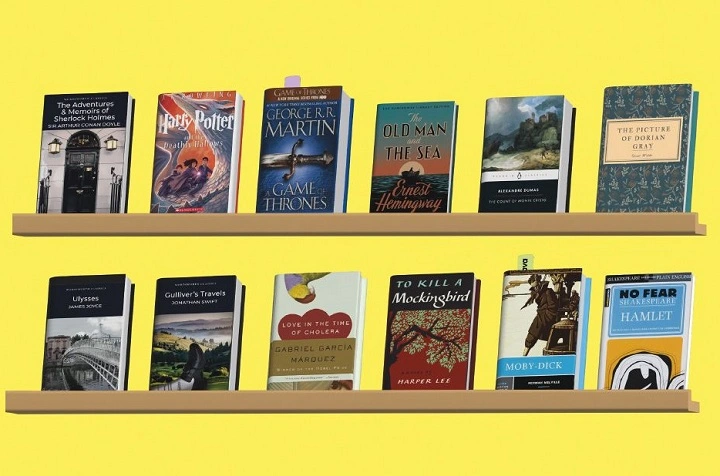
The Alchemist by Paulo Coelho
It is an inspirational novel conveyed in simple yet effective words. For beginners as well as mid-level students. Motivational quotes and words used naturally.
Pride and Prejudice by Jane Austen
A conventional textbook that formally does English, polite talk, and story vocabulary. It forces students to learn a manner of employing words to express feelings and manners.
The Great Gatsby by F. Scott Fitzgerald
The novella is full of poetic and refined English. It exposes the readers to high-level words. Which comes with easy sentences to read.
Harry Potter Series by J.K. Rowling
These books have words of usage in speech and everyday life. They use main dialogue with words used to narrate, and thus are best suited for vocabulary practice.
Animal Farm by George Orwell
A short and useful book with words that are easily usable. It has political words and speech words, best for those students looking for more words.
To Kill a Mockingbird by Harper Lee
It’s extremely dialogue-driven, and that makes it extremely readable when it comes to understanding how words are utilized in speech. It also educates one in vocabulary terms of culture, justice, and life.
Jane Eyre by Charlotte Brontë
It’s a high-level novel which is most appropriate for those students who enjoy constructing and cultivating vast and complex vocabulary. The novel teaches one about aged and formal English which remains applicable to the present day.
The Old Man and the Sea by Ernest Hemingway
Hemingway’s writing style is direct. He uses proper sentences. The novel is most appropriate for students who enjoy using plain but powerful words.
The Catcher in the Rye by J.D. Salinger
A contemporary classic with ordinary English. It has an impact on slang, and idioms. The most fashionable words uttered by teens in this.
Matilda by Roald Dahl
A great children’s novel with simple English to learn. It contains simple vocabulary to use and simple sentences to learn for students.
Novels to Learn Vocabulary

- Of Mice and Men by John Steinbeck – Simple yet strong vocabulary commonly used in day-to-day conversations.
- Little Women by Louisa May Alcott – Simple words related to family and feelings easy to learn.
- Lord of the Flies by William Golding – Descriptive words and narrative of a story best to learn.
- Wonder by R.J. Palacio – Contemporary novel with seemingly simple, evocative words.
- The Diary of a Young Girl by Anne Frank – Familiar words of everyday life.
Tips to Develop Vocabulary Through Novels
- Select the Proper Level – Don’t begin with a book that’s not at your level.
- Read Daily – Reading 15 minutes a day does make a difference.
- Highlight and Note – Highlight unknown words and write them down.
- Flashcards – Study troublesome words daily.
- Re-tell the Story – Try re-reading chapters in your own words.
Student errors
- Their best effort at word-for-word translating every word into their own language.
- Reading very tough books at an early age.
- Inadequate focus on pronunciation while acquiring words.
- After reading a book and failing to reinforce vocabulary.
Advantages of Learning Vocabulary from Novels
- Improves spoken as well as written English.
- Goes down to an easier level of grammar rules.
- Gives a boost in speaking confidence.
- Develops word consciousness in a natural and fun way.
- Helps with exams, professional, and everyday communication.
Best Books to Improve Vocabulary: FAQs
Which novel can a beginner read to learn words?
Freshers will find it best to begin with basic books like Charlotte’s Web, Matilda, or The Alchemist.
Will reading really help me learn my vocabulary?
Yes. Reading habit teaches you the usage of words in real sentences, and hence you are comfortable and can recall them easily.
Must I write down all the new words that I am assigned?
No, write down the common or significant words individually only. Otherwise, it will take so long to read the story.
Which books make contributions to modern vocabulary?
Novel books such as Harry Potter, Wonder, and The Catcher in the Rye are the best ones to pick up new phrases.
How long will it take for me to get better?
You can advance in months as long as you read every day and learn new words and practice them.
Last Thoughts
Using more words doesn’t always have to be boring and pedantic. Novels give you real stories, dialogue, and descriptions. Which makes words memorable. Reading a novel lets you get immersed in lovely stories. It helps you to learn the language in the subconscious.
The key is persistence. Read every day, underline new words, use them, and practice them regularly. Someday your vocabulary will increase, your confidence level will grow, and English will no longer be a conqueror to be vanquished but a second nature means of expression.
So read a book today, and begin the journey to a stronger vocabulary in English with a book you enjoy.