

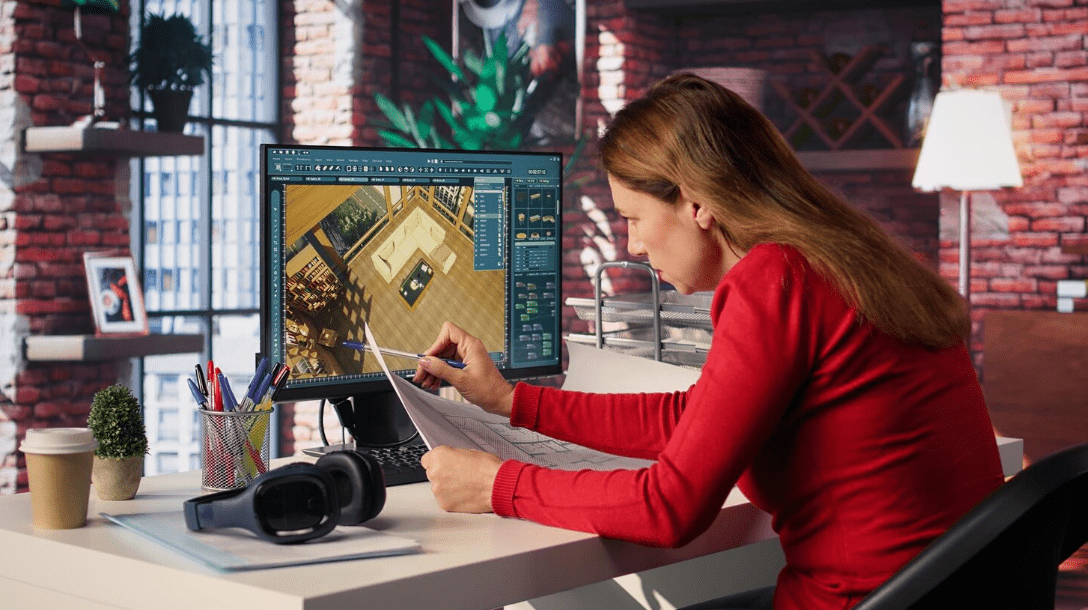
The creation of high-fidelity 3D assets is one of the most expensive and time-consuming parts of the game development pipeline. The primary purpose of using AI game generators and asset creation tools is to automate the technical hurdles of modeling, UV mapping, and texturing. Modern AI can take a 2D sketch or a simple text description and generate a fully textured 3D model that is ready for use in a game engine. This technology allows artists to move away from the mechanical work of “polishing pixels” and toward the higher-level task of art direction and world-building.
The target audience for these creative tools includes concept artists, environment designers, and independent game creators. For a concept artist, AI provides a way to rapidly prototype characters and creatures, seeing them in 3D long before a manual modeler would be finished. For indie developers, these tools offer access to a level of visual quality that was previously locked behind massive AAA budgets. By automating the creation of background assets—such as rocks, plants, or generic architecture—AI allows the team’s human artists to focus their energy on the “hero assets” that define the game’s unique visual identity.
The benefits of AI asset generation are centered on production velocity and artistic experimentation. Developers can now generate and test hundreds of different visual styles for a project in a matter of days. Furthermore, AI tools are excellent at creating “seamless” textures and high-resolution materials that look realistic under any lighting conditions. This reduces the need for expensive photoshoots or specialized material scanning. The cost savings are immense, as the time required to create a single high-quality character can be reduced from weeks to hours. This efficiency is essential for the survival of small studios in a highly competitive market.
In practical usage, an artist might use an AI plugin to generate a “base mesh” for a new monster. They then use generative texturing tools to apply realistic scales, fur, or metallic armor. The usage also extends to “retopology,” where the AI automatically optimizes the model’s geometry for better performance in the game engine. This hybrid workflow combines the unique vision of the human artist with the incredible speed of the machine. To explore more about how these generative capabilities are being used to create entertaining AI content for the general public, you should check out our latest reviews. AI is fundamentally changing the way we manufacture digital reality.